Is a Chess Coach Worth It? An Honest Look at Costs and Alternatives
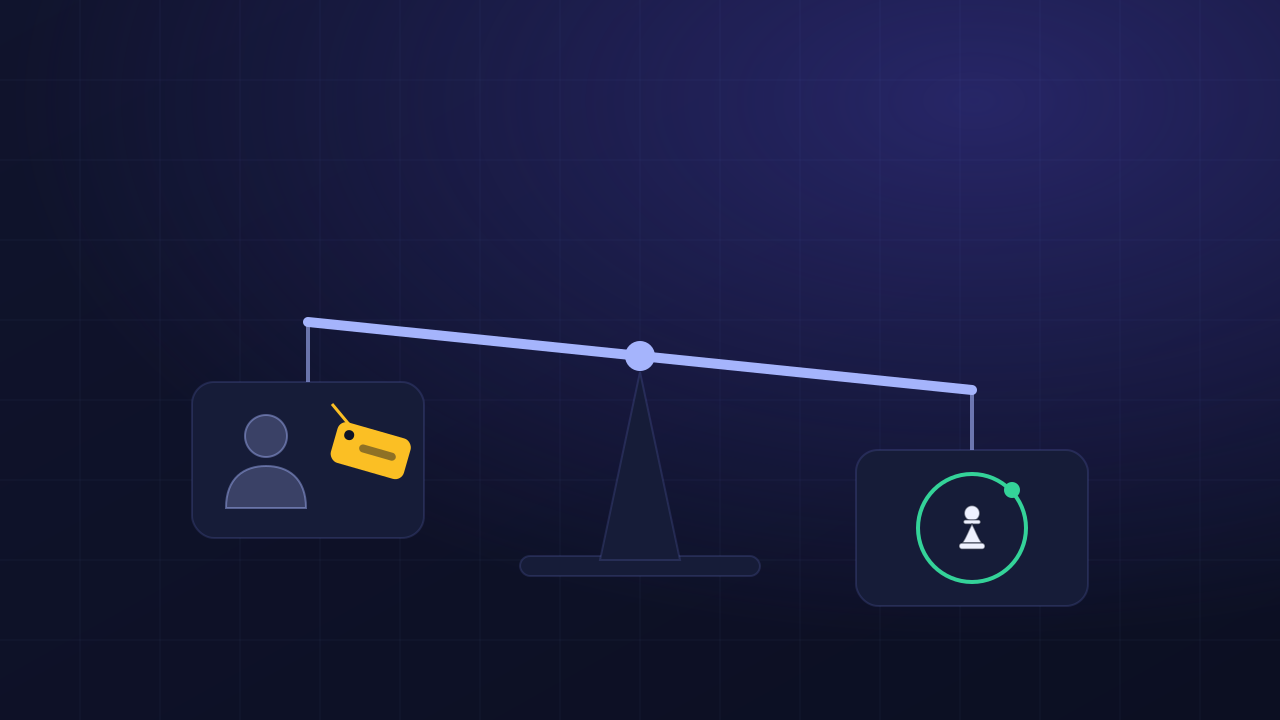
A decent human chess coach costs $40–100+ an hour, and stronger titled coaches charge well beyond that. At one lesson a week, that is a serious annual spend for a hobby. So the question deserves a straight answer rather than a sales pitch: what does a coach actually do for you, when is it worth the money, and what covers the same ground for less?
What a good coach actually does
Strip away the aura and a coach provides four things:
- Diagnosis. They look at your games and tell you why you lose — not “you blundered,” but “you blunder when you recapture quickly in positions you think are safe.”
- A plan. They turn that diagnosis into the two or three things worth training now, and they resist your urge to study whatever is shiny this week.
- Explanation. They answer “why is my move worse?” in words that make sense at your level — the thing raw engine lines never do.
- Accountability. A standing appointment makes you do the work.
Notice what is not on the list: secret openings and grandmaster wisdom. At club level, improvement is overwhelmingly about finding and fixing your recurring mistakes.
When a human coach is clearly worth it
Some situations genuinely call for a human: you are past ~1800 and your weaknesses have become subtle; you are preparing for over-the-board tournaments and need help with nerves, time pressure and preparation between rounds; or a junior in your family is climbing fast and needs structured guidance. In those cases, pay for quality and treat it as what it is — professional tuition.
What most improvers actually need
Below that level, be honest about where the value is. Most players paying for lessons are buying the diagnosis-and-plan loop: someone to review their games, name the recurring leaks, and point the next fortnight of practice at them. That loop does not require a human — it requires consistency, engine-grade analysis, and something that remembers your history instead of starting from zero every session.
The AI coach alternative
That memory is exactly what PawnPilot’s AI coach is built around. It imports your Chess.com and Lichess games, finds the patterns behind your mistakes, explains the why in plain language, and keeps a coach’s file on you — so next month it knows whether your back-rank problem is actually improving and reshapes your training plan accordingly. It is available at 11pm after a tilting loss, and a year of it costs about what a single human lesson does.
Where AI coaching still falls short
Honesty cuts both ways. An AI coach will not sit across the board at a tournament, read your body language, or manage a junior’s motivation through a losing streak. If you thrive on the social commitment of a weekly lesson, a human provides that in a way software does not. The two also stack perfectly well: many players use tooling for the weekly loop and a human coach monthly for the things only humans do.
The short version
- A coach sells diagnosis, a plan, explanation and accountability — not secrets.
- Past ~1800, for tournament prep, or for ambitious juniors: a human coach is worth it.
- Below that, the diagnosis-and-plan loop is the value — and it automates well.
- An AI coach that remembers you costs roughly one human lesson per year.
Spend money on coaching when you have outgrown the loop — not to acquire it.