Stuck at the Same Rating? How to Break a Chess Plateau
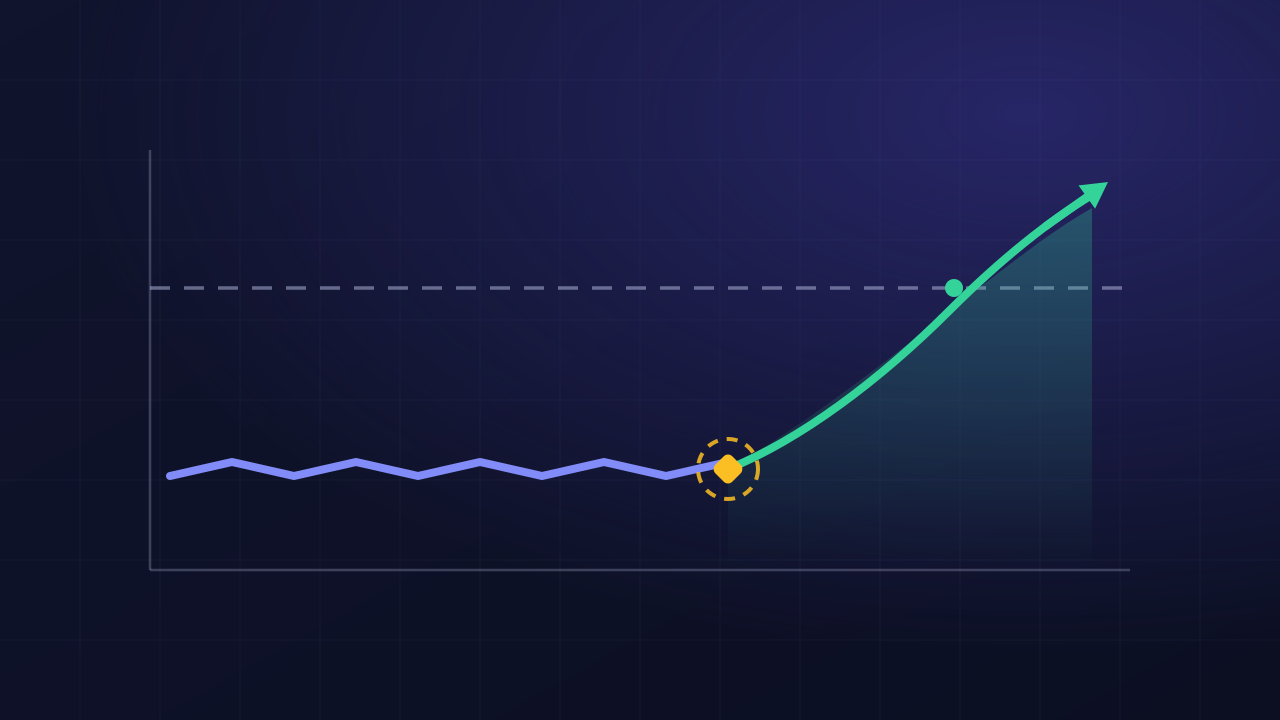
Two hundred games at the same rating. Playing daily, doing puzzles, watching videos — and the graph will not move. A plateau feels like a verdict on your talent. It is not. It is a signal with a precise meaning: your practice has stopped touching your weaknesses. Read it that way and it tells you exactly what to do next.
Why plateaus happen
Early improvement is easy because everything you do fixes something. Past that stage, you drift toward practice that feels good: puzzles in your favourite motifs, openings you already know, blitz sessions that entertain but never get reviewed. Comfortable practice rehearses your strengths. Meanwhile the two or three weaknesses actually capping your rating go untouched — and the graph goes flat. Plateaus are not a lack of effort; they are effort pointed at the wrong targets.
Audit your last 20 losses
You cannot target what you have not named, so start with an audit. Go through your last 20 losses and write one line each: where did the game actually go wrong, and what kind of mistake was it? Hung a piece after a quick recapture? Drifted planless out of the opening? Collapsed in a winning endgame? Flagged?
The list will be repetitive — that is the point. Most players find a small handful of habits behind nearly all their blunders. A systematic review of your own games turns 20 scattered losses into two or three named leaks, and those leaks are your entire study plan.
Do deliberate practice on the ugly stuff
Now invert your instincts: train what you avoid. If your endgames leak, drill endings until they stop. If you miss defensive resources, solve defensive puzzles. If your openings fall apart on move eight, fix the repertoire. Deliberate practice feels awkward precisely because it works — it operates at the edge of your ability, on material you would never choose for fun. Thirty targeted minutes a day beats three comfortable hours.
Measure habits, not rating
Rating is a lagging indicator; it moves weeks after the improvement happens, and staring at it mid-plateau is how tilt starts. Track the inputs instead: blunders per game this month versus last, how deep your games stay in book, whether the named leak is shrinking. Habits respond to training within days, and watching them move keeps you going through the flat stretch of the graph — right up until it is not flat any more.
Get a coach that keeps the thread
Everything above is a loop — diagnose, target, train, re-measure — and the hard part is running it honestly for months. That is what PawnPilot’s AI coach is for: it analyses your games, names the habits costing you points, points your training at them, and — the part that breaks plateaus — remembers. Next month it knows whether the back-rank leak actually closed, celebrates the habits that improved, and re-aims the plan at whatever is capping you now.
The short version
- A plateau means your practice stopped touching your weaknesses — nothing more.
- Audit your last 20 losses and name the two or three recurring leaks.
- Train the ugly stuff deliberately; comfortable practice maintains, it does not improve.
- Track habits, not rating — rating follows weeks later.
Plateaus do not break from playing more. They break from aiming better.