The Best Chess Openings for Beginners (and Why "Best" Is the Wrong Question)
New players almost always ask the same thing: “What is the best opening?” It is the wrong question. At the beginner and improver level, the best opening is the one that teaches you good habits, is hard to blow up in the first ten moves, and that you will actually remember. Here are a few that fit — for both colours.
As White: the Italian Game
1. e4 e5 2. Nf3 Nc6 3. Bc4
The Italian is the classic teaching opening for a reason. Every move follows a principle you want to internalise anyway: control the centre, develop a knight, develop a bishop to an active square, castle. There is very little you have to memorise — if you understand why each piece goes where it does, you will find good moves on your own.
As White (alternative): the London System
1. d4 followed by 2. Bf4, 3. e3, 4. Nf3, 5. Bd3, 6. c3
If you would rather set up the same reliable structure against almost anything Black does, the London is hard to beat. It is solid, low-theory, and gets you to a comfortable middlegame every time. The trade-off: it can become a little automatic, so make sure you still ask what your opponent is doing.
As Black against 1. e4: the Caro-Kann
1. e4 c6
Solid, structurally sound, and far less sharp than trying to survive the openings your higher-rated opponents have prepared. You get a reliable pawn structure and clear plans.
As Black against 1. d4: the Queen’s Gambit Declined
1. d4 d5 2. c4 e6
A rock-solid classical setup that has been played at world-championship level for over a century. You will not get tricked in 8 moves, and you will learn healthy central play.
The part everyone skips: making it stick
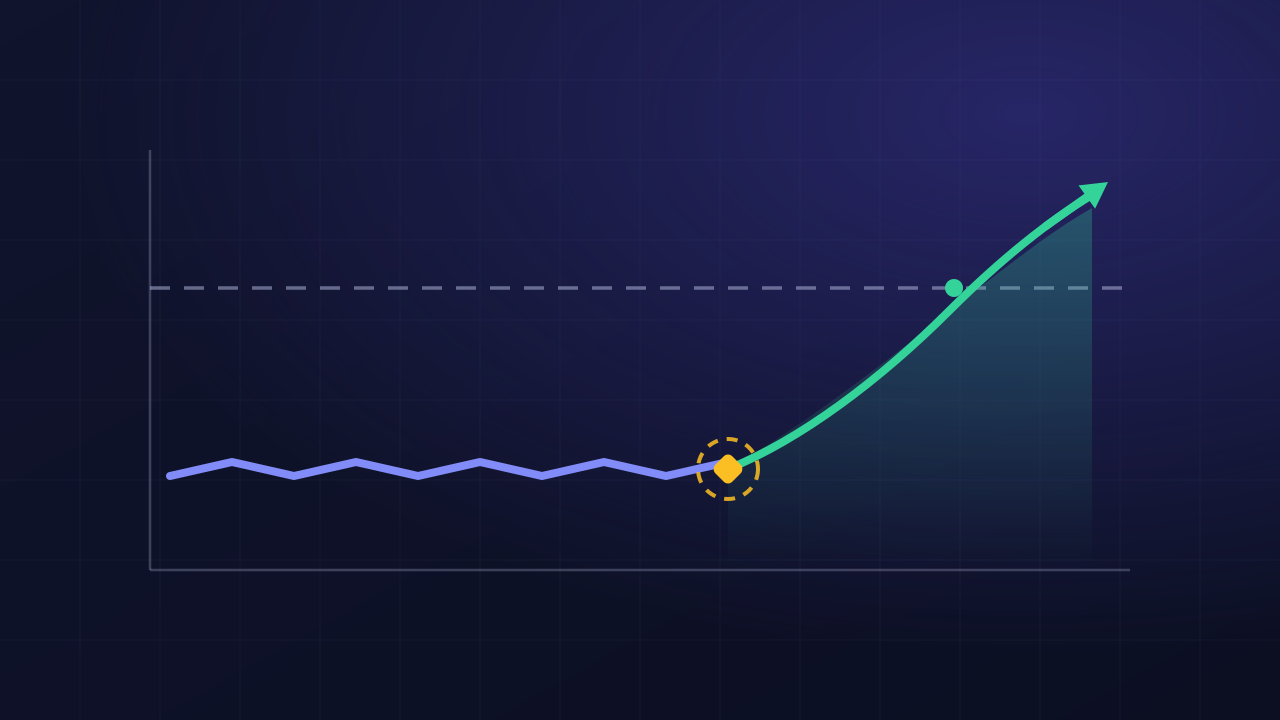
Picking an opening is 10% of the work. The other 90% is playing it enough — and reviewing where you left the plan — that the moves become automatic. Most beginners “learn” an opening from a video, play it twice, drift off-book on move 6, and conclude it “doesn’t work.”
Two things fix that:
- Learn ideas, not just moves. Know the point of the opening — where your pieces belong and what pawn breaks you are aiming for. Then when your opponent plays something you did not memorise, you still know what to do.
- Drill your real repertoire. Spaced repetition on the exact lines you play locks them into memory far faster than passive watching.
That second point is where a tool helps. PawnPilot’s opening trainer shows exactly where you drift off-book in your own games, then drills your repertoire with spaced repetition until the moves are second nature — so you stop losing the game before the middlegame even starts.
Bottom line
Do not chase the “best” opening. Pick a principled one from the list above, learn why it works, and drill the lines you actually play. Good habits beat memorised theory every time at this level.