How to Stop Losing Chess Games on Time
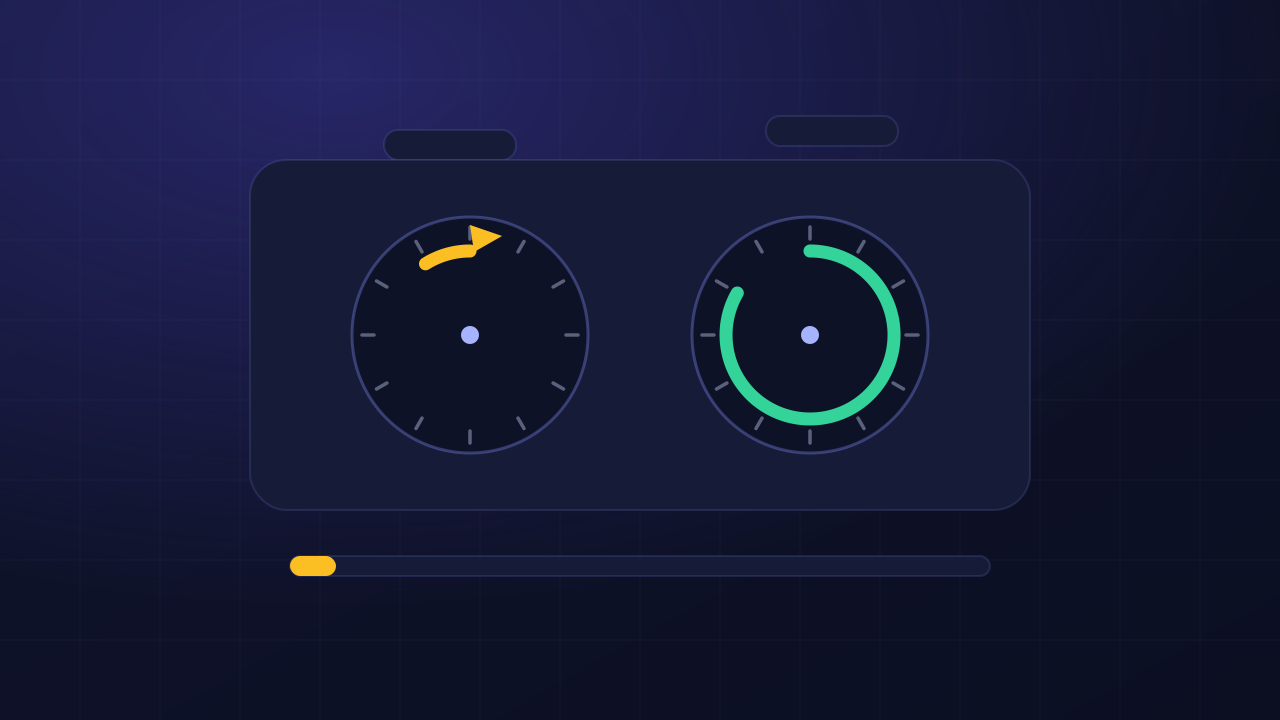
Losing on time in a position you were winning is the most preventable loss in chess — and for chronic time-trouble players it happens every single session. The instinct is to blame nerves or bad luck. The truth is more useful: time trouble is a habit with specific causes, and each one has a fix.
Time trouble is a habit, not a personality trait
Players love to say “I am just a time-trouble player,” as if it were eye colour. Look closer and the minutes leak at predictable moments: re-deriving opening moves you never drilled, agonising between two equally fine candidate moves, triple-checking a decision you already made, or sulking over a mistake while your clock runs. None of that is personality. All of it is trainable.
Budget the clock by phase
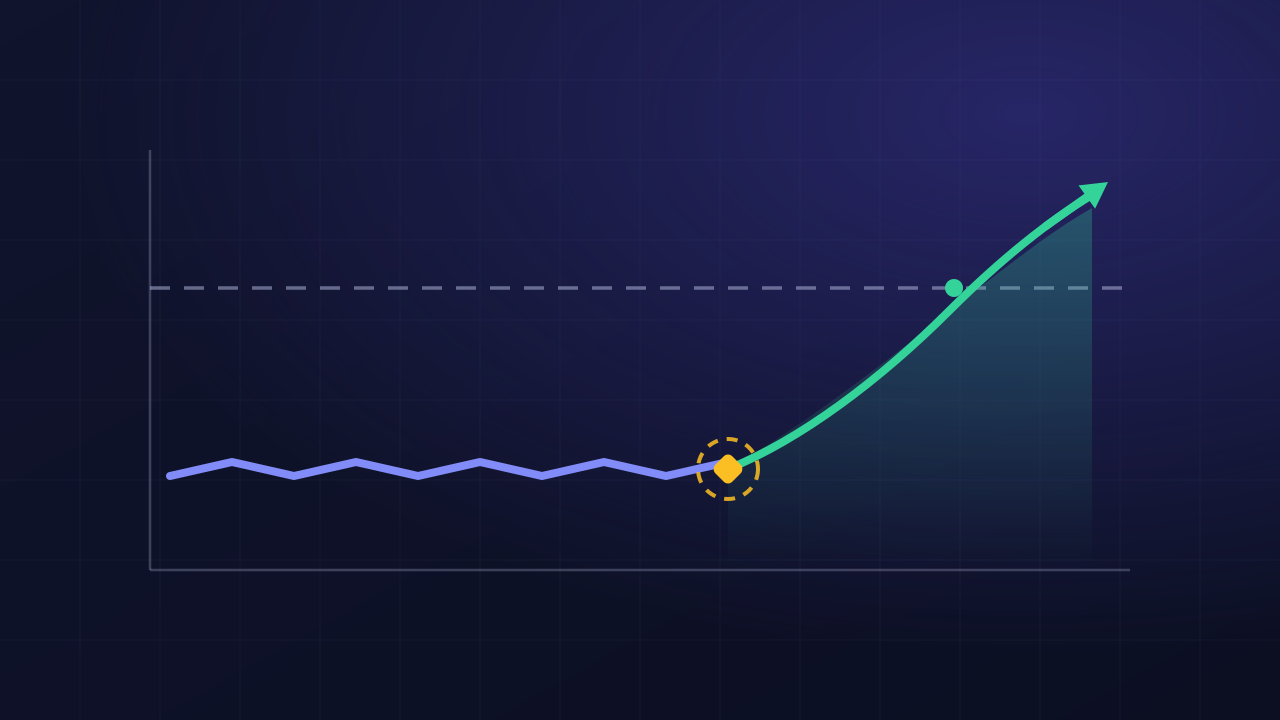
A rough budget changes behaviour immediately. In a 10-minute game, aim to leave the opening with about 80–90% of your clock, spend your time where the game is actually decided — the critical middlegame moments — and keep a reserve for the endgame, where a few seconds of accuracy decide whether the full point converts.
The opening budget is the easiest win: those moves should cost almost nothing. If they do not, your repertoire is not drilled enough — train your openings until the first eight or ten moves are reflex, and you have bought yourself minutes every game.
Use the good-enough rule
The classic clock sink is choosing between two moves that are both fine. Adopt a rule: when two candidates look close after a sanity check, take the safer one and move on. The 30 seconds you save matter more than the 0.2 pawns of difference. Save deep thinks for genuinely critical moments — recognising which moments are critical is itself the skill.
Speed is pattern recognition, not rushing
You cannot simply decide to move faster; you calculate as fast as you recognise patterns. Daily tactics training is clock training in disguise: motifs you have drilled get spotted in seconds instead of computed in minutes. This is why strong players seem fast — they are not hurrying, they are recognising.
Find where your minutes actually leak
Finally, treat your clock like you treat your moves: review it. Play through your recent losses and note where the big thinks happened and what they bought you — most players discover the same two or three leak points repeating across every game. Reviewing your games with PawnPilot’s game analysis makes the pattern hard to miss: the mistakes cluster exactly where the clock was already low, which tells you the blunders and the flagging are the same problem wearing two masks.
The short version
- Stop calling time trouble a personality trait — it is a set of habits.
- Budget by phase: openings nearly free, deep thinks only at critical moments.
- When two moves are close, play the safer one and bank the clock.
- Drill tactics daily — speed is recognition — and review where your minutes leak.
Fix the habit and you get the wins your position already earned.