How to Get Better at Chess Tactics (It's Not Just More Puzzles)
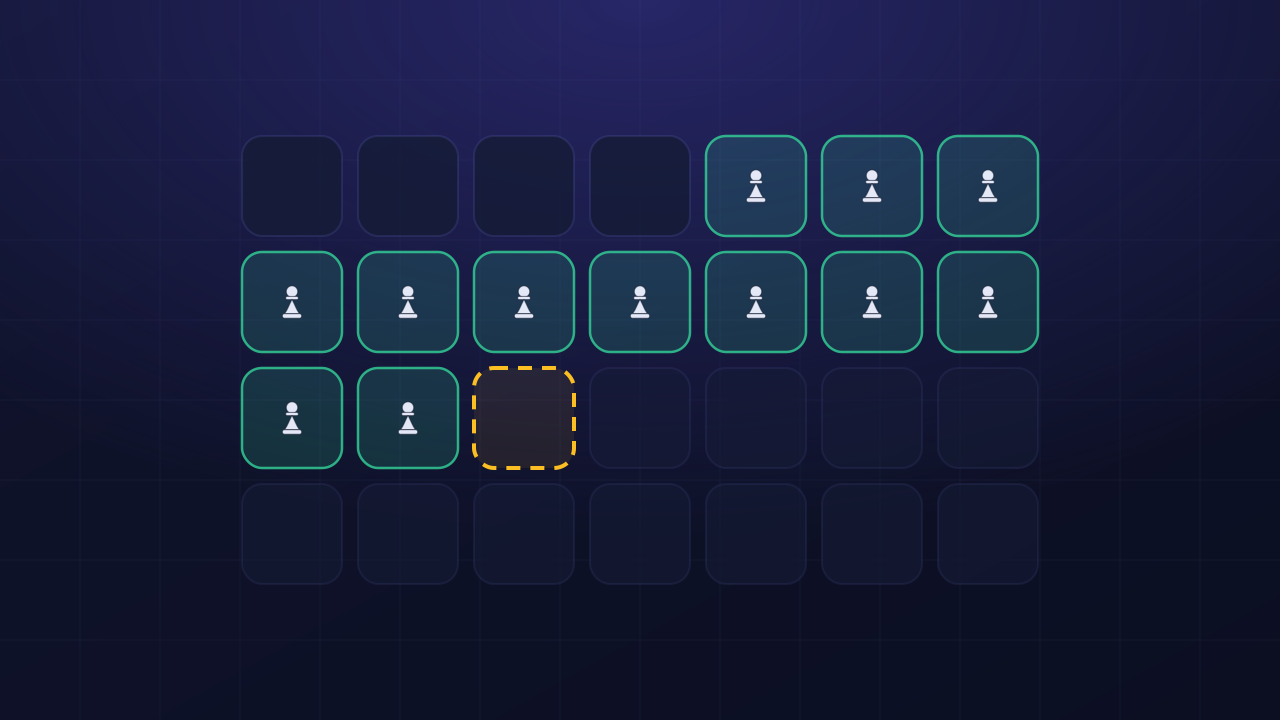
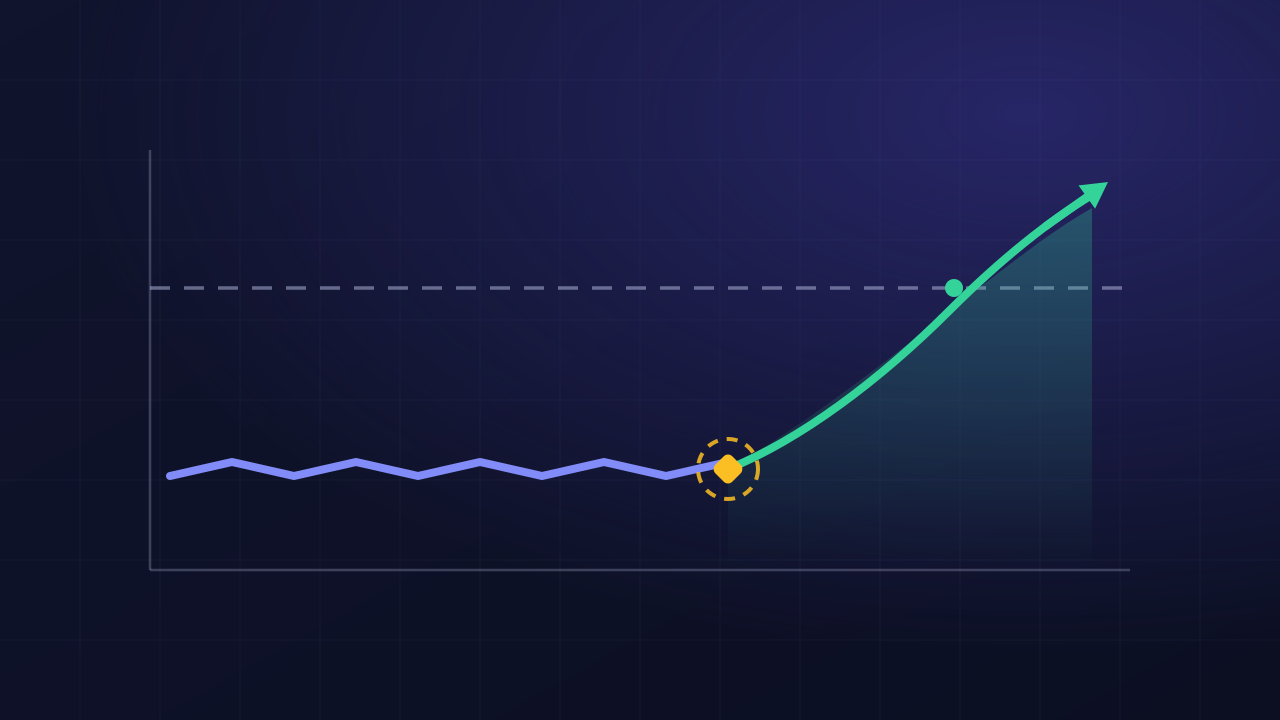
Plenty of players grind puzzles every day, watch their puzzle rating climb — and their game rating sit still. If that is you, the problem is not effort. It is that random puzzle grinding trains a narrow skill: solving positions you have been told contain a tactic. Getting better at tactics in real games takes something more deliberate.
Why puzzle volume stops working
Random puzzle sets are drawn from every motif at once, so most of your reps land on patterns you already know. You get faster at the forks and pins you recognised months ago, while the motifs you actually miss — the discovered attacks, the removal-of-the-guard ideas, the back-rank weaknesses — appear too rarely to improve. Comfortable practice, flat results.
Train the motifs you miss
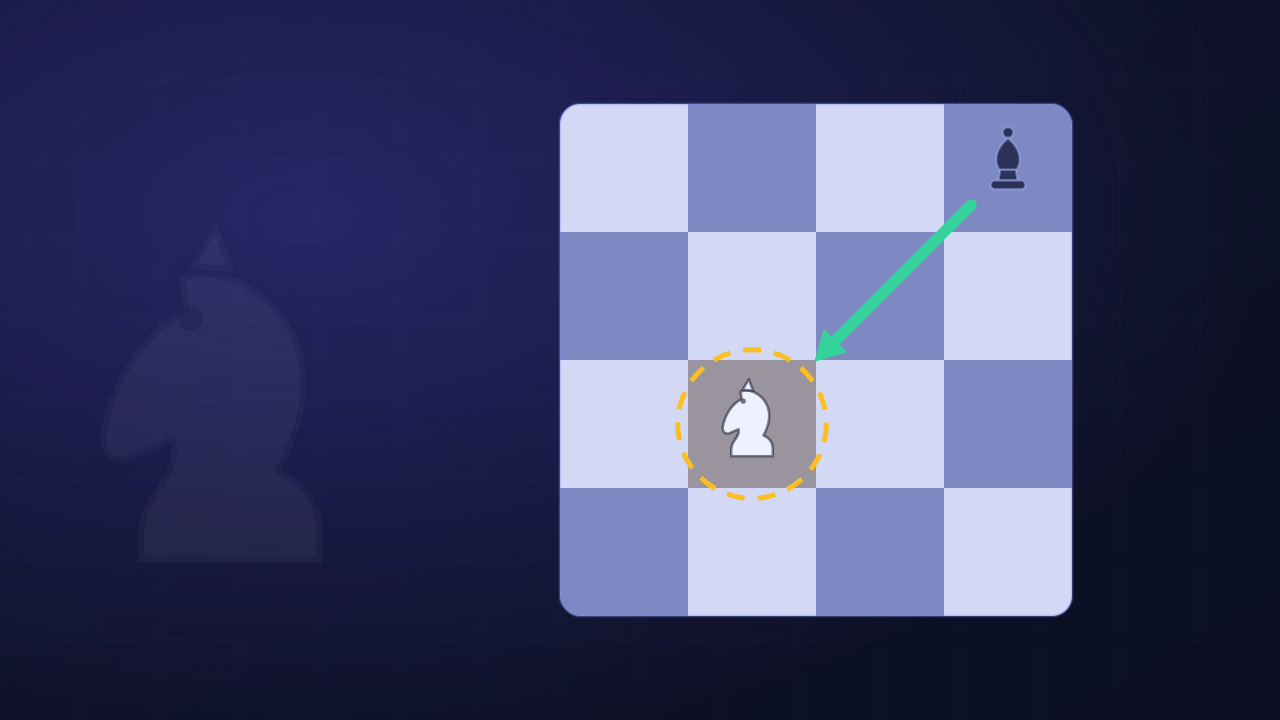
The fix is embarrassing in its simplicity: keep a miss list. Every time you fail a puzzle or miss a tactic in a game, note the motif. Within a couple of weeks the list stops looking random — the same two or three themes dominate. Those themes are your training plan; drill them until they jump off the board, and only then move on. Your games are the best source here, because the tactics you missed under real conditions are, by definition, the ones your brain does not yet see. The same logic applies to the blunders you keep repeating — patterns, not accidents.
Fix the scan, not just the solve
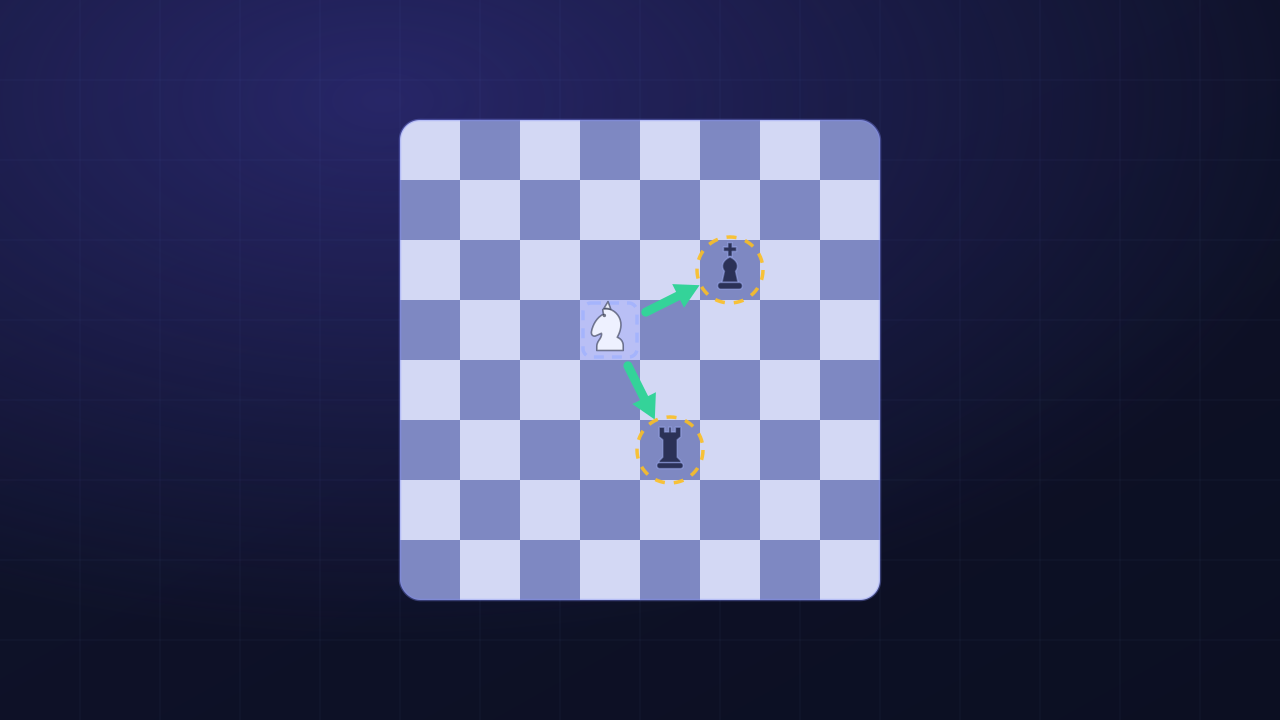
Real games never announce “White to play and win.” The skill that transfers is the habit of scanning every position, every move, for checks, captures and threats — yours and your opponent’s. When you solve puzzles, practise the scan explicitly: before hunting for the answer, list the forcing moves for both sides. You are not just solving a puzzle; you are rehearsing the routine you will run hundreds of times per game.
Calculate to the end before you move
Guess-clicking a plausible first move teaches you to guess in games too. On every puzzle, calculate the full line — including your opponent’s best defence — before touching a piece. If you were wrong, do not shrug and skip ahead: replay the solution and find the exact move you misjudged. One puzzle solved this way is worth ten solved on vibes.
Make every rep count
All of this is far easier when your trainer does the targeting for you. PawnPilot’s tactics training mines puzzles from your own games — the exact tactics you missed at the board — tracks which motifs you fail, and brings your misses back with spaced repetition until they stick. When you want raw sharpness, Storm and Streak modes are there for speed work; the improvement engine underneath stays aimed at your weaknesses.
The short version
- Random puzzle grinding rehearses what you already know — that is why it plateaus.
- Keep a miss list and drill your two or three weakest motifs until they are reflexes.
- Practise the scan — checks, captures, threats, both sides — on every single move.
- Calculate to the end before moving; review every miss to the exact wrong turn.
Tactics win club games. Train the ones you miss, properly, and the rating follows.