Chess Endgames for Beginners: Learn These 6 Positions First
Beginners pour their study time into openings, but the points actually change hands at the other end of the game — in endgames that one side misplays. The good news: the beginner endgame syllabus is tiny. Six positions cover the vast majority of what you will face below 1600, and none of them takes long to learn.
1. King and queen vs king
The mate you will deliver most often. Use the queen to shrink the enemy king’s box — keeping a knight’s-move distance so there is no stalemate trick — then walk your own king up and deliver mate on the edge. The one thing to drill: recognising stalemate before it happens. More wins are thrown away here than anywhere else.
2. King and rook vs king
Same idea, less firepower. Cut the king off with the rook, use your own king to take away squares, and give a waiting move when the kings stand opposed. It should take you under 20 moves without thinking hard.
3. King and pawn: the opposition
The heart of pawn endgames. When the two kings face each other with one square between them, whoever must move loses ground. Learn to put your king in front of your pawn and win the opposition, and you will convert pawn-up endgames that stronger players expect to win — and hold the draws you are supposed to hold.
4. The rule of the square
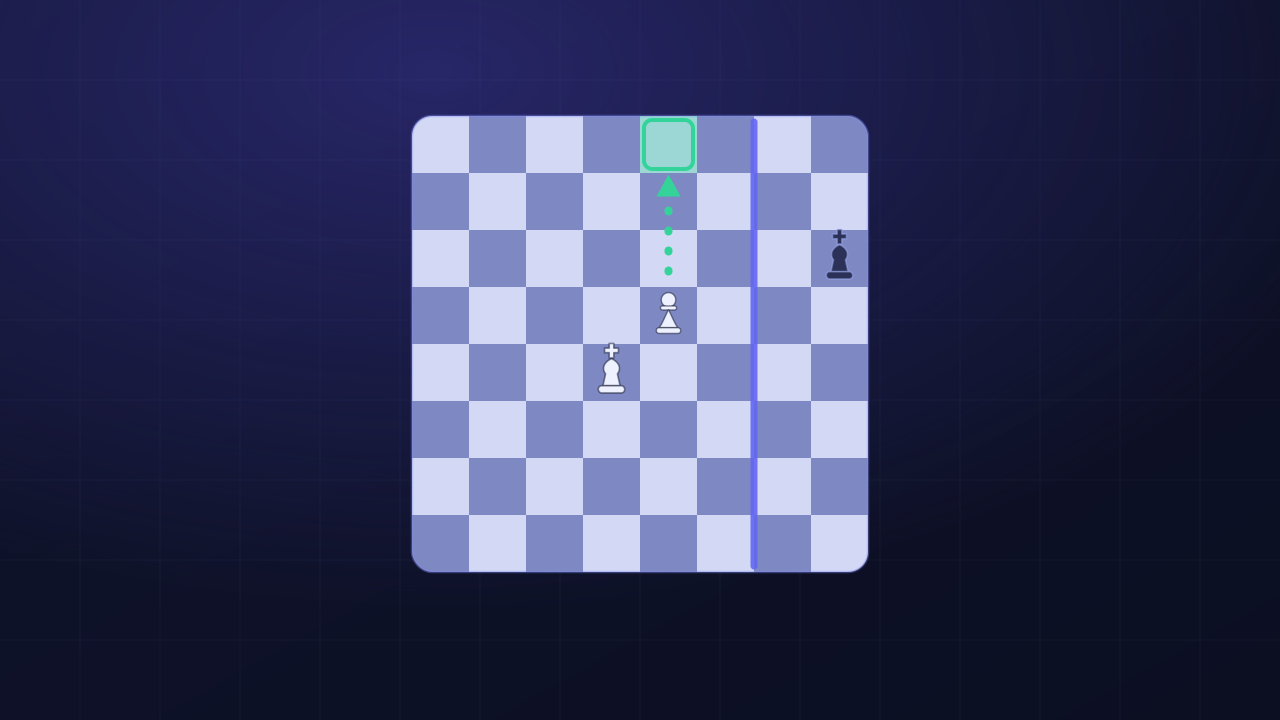
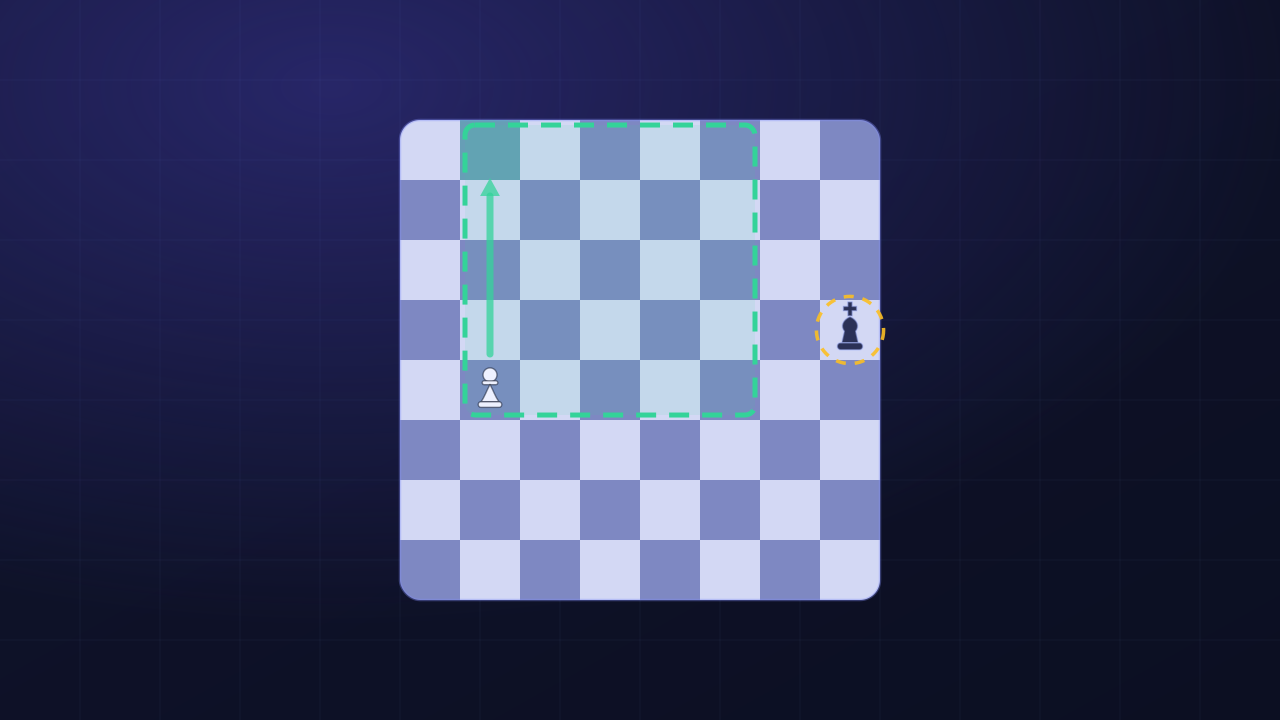
Can your king catch a runaway passed pawn? Draw the diagonal from the pawn to its promotion rank and complete the square: if the defending king can step inside it, the pawn is caught. One glance replaces ten moves of nervous counting — especially useful with the clock running.
5. The Philidor position (the draw you must know)
Rook endgames are the most common endgames in chess. Defending rook-and-pawn-down, the Philidor method holds effortlessly: park your rook on the third rank until the pawn crosses it, then swing behind and check the enemy king forever. Know this and a whole class of “lost” positions becomes a comfortable half point.
6. The Lucena position (the win you must know)
The winning counterpart. With your pawn on the seventh and your king boxed in ahead of it, you win by building a bridge: cut the enemy king off, then use your rook as a shield against the checks. If the Philidor is your shield, the Lucena is your sword.
How to actually learn them
Reading about these once will not survive a real game three weeks from now. Two habits make them permanent:
- Play them out against resistance. Set the position up and win it (or hold it) against an opponent that defends perfectly, until the technique is automatic.
- Revisit before you forget. One rep today, another in a few days, another next week.
That is precisely how PawnPilot’s endgame trainer works: tablebase- verified Convert-the-Win and Hold-the-Draw drills for each of these positions, scheduled with spaced repetition, so the technique is there when a real game depends on it. And once these six are solid, the habits in converting a winning endgame turn them into full points.
The short version
- Learn the two basic mates: king and queen, king and rook — and stop stalemating.
- Master the opposition and the rule of the square for pawn endgames.
- Add the Philidor (to draw) and the Lucena (to win) for rook endgames.
- Drill each one against perfect defence, spaced over time, until it is automatic.
Six positions. A few evenings of practice. More rating than a month of opening study.